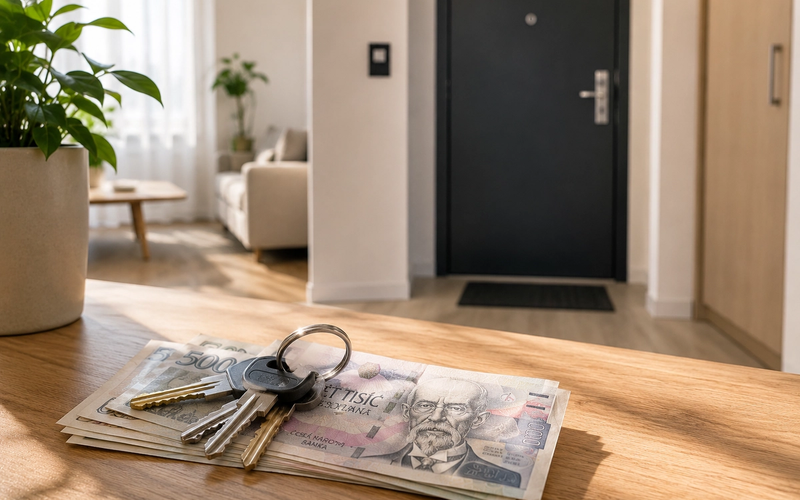
Lease vs Sublease in the Czech Republic: What's the Difference
Renting a room in Prague usually makes you a subtenant, not a tenant. What najem vs podnajem really means for your rights, and what to check before you sign.
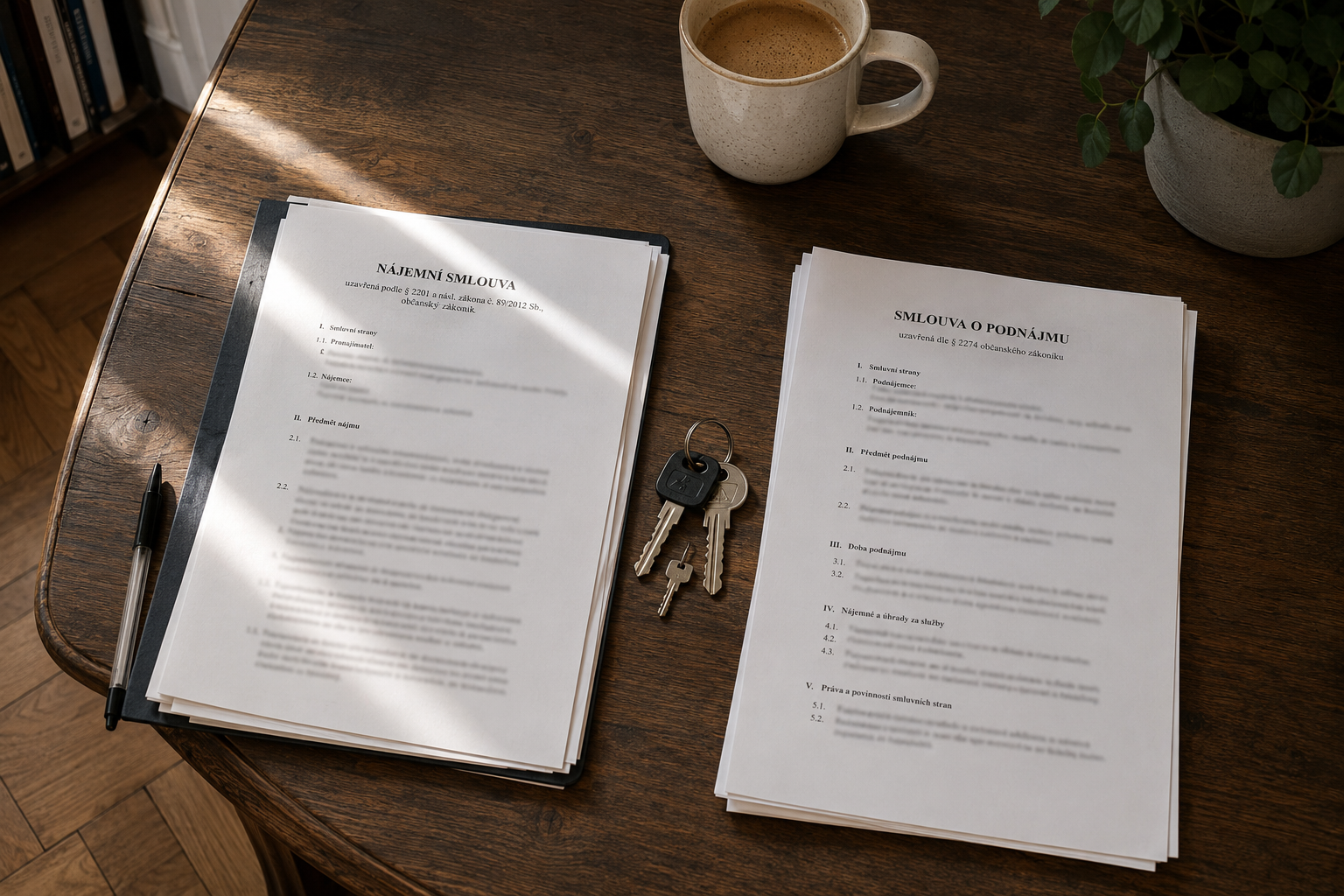
If you're renting a room in a shared flat in Prague, there's a good chance you're not actually a tenant in the legal sense; you're a subtenant. The difference between najem (a lease) and podnajem (a sublease) sounds like jargon, but it changes who you're bound to, what rights you have, and what happens if things go wrong. Here's the plain-language version.
Najem vs podnajem: the core difference
It comes down to who you sign with. A najem (lease) is a contract directly with the property's owner; you are the najemce, the tenant. A podnajem (sublease) is a contract with someone who is themselves only a tenant, not the owner. They rent from the landlord, and you rent from them. In a sublease, your counterpart isn't the owner at all, which is the root of every other difference below.
When is subletting even allowed?
Czech law (Sections 2274 and 2275 of the Civil Code) draws a clear line based on whether the main tenant actually lives in the flat:
- If the main tenant lives there, they may sublet part of the flat, a room, even without the landlord's explicit consent
- If the main tenant does not live there, subletting the flat or part of it requires the landlord's consent
This matters to you as a subtenant: if your landlord is subletting the whole flat without the owner's permission, the arrangement is on shaky legal ground, and you could be the one who loses out.
What it means for your rights
As a subtenant, your rights flow from your sublease and are tied to the main lease above it. The big consequence: a sublease cannot outlive the lease it sits under. If the main tenant's lease ends, or they get evicted, your right to stay ends with it, regardless of what your own contract says. You generally have less direct protection than a tenant with a lease straight from the owner, which is why the written details matter even more.
Renting a room usually means a sublease
This is the common case for roommates and students. When you rent one room in a flat that someone else holds the lease on, you're almost always a subtenant, not a co-tenant. That's not bad in itself; plenty of perfectly good living situations are subleases. But you should know which one you're in, because it determines who returns your deposit and whose name protects the flat.
The risks of an informal arrangement
Cash, a handshake, and no paperwork is where subtenants get burned:
- No written sublease means no clear proof of your deposit, your rent, or your right to be there
- If the main tenant wasn't allowed to sublet, the owner can demand you leave
- If the main tenant stops paying the real rent, the whole flat can be at risk, including your room
None of this means avoid subleases; it means insist on doing them properly.
What to check before you sign
Before agreeing to a sublease, confirm:
- There's a written sublease contract naming you, the rent, the deposit, and the notice period
- The main tenant is actually allowed to sublet: they live there, or they have the owner's consent in writing
- When the main lease ends, so you know the latest your arrangement could last
- Exactly who holds your deposit and how you get it back
Knowing whether you're signing a najem or a podnajem won't change the flat, but it changes how protected you are inside it. Ask the question before you sign, get it in writing, and you're on solid ground. And when you're choosing who to share that flat with in the first place, matching with roommates you can actually trust is exactly what DomuHQ helps you do.
Source: subletting rules above are set by the Czech Civil Code (Act No. 89/2012 Coll.). General information, not legal advice.