
How to Verify a Landlord or Agency in the Czech Republic Before You Pay a Crown
Check the owner in the land registry, the agency's licence, the photos and the bank account. A 15-minute routine that stops most rental scams cold.
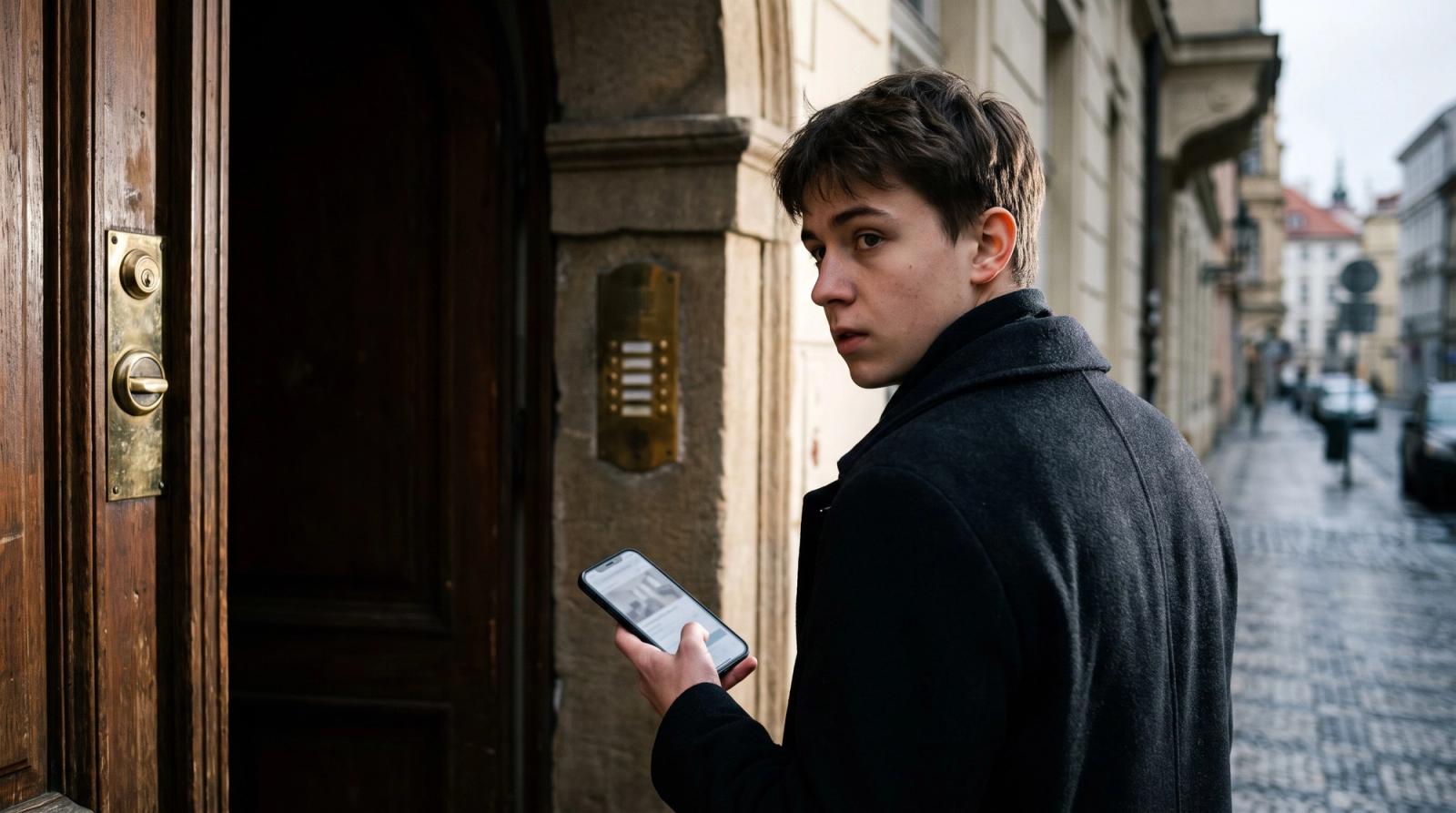
In February 2026 Prague police described a man who met would-be tenants in cafés, showed them a video of a flat on his phone and took deposits, saying a viewing was impossible because tenants still lived there. Three victims in one week lost almost 150,000 CZK between them, and he was being investigated over roughly 40 cases. A month later Expats.cz traced a ring posting cheap Prague flats in Facebook groups using photos copied from listings in Lithuania. Neither scheme would have survived fifteen minutes of checking. Here is that fifteen minutes.
If you want the warning signs first, read how to spot a scam listing in Prague. This article is the verification routine you run once a listing looks real.
Step 1: find out who owns the flat
The Czech land registry (katastr nemovitostí) is public and free to look at on nahlizenidokn.cuzk.cz. The quickest route: open the address on Mapy.cz, right-click the building, choose "Co je zde?" and follow the cadastre link. You will see the building and its units. For individual flats, the owner's name is sometimes only shown after you log in with a Czech digital identity, and you cannot search by a person's name, only by property. If you need an official extract, it costs up to 100 CZK for the first page.
Then compare. Is the name on the registry the name of the person you are dealing with, and does it match their ID when you meet? If yes, good. If not, go to step 2.
Step 2: if they are not the owner, ask what gives them the right
Plenty of legitimate people rent out flats they do not own: a relative, a property manager, a tenant subletting a room. Each should be able to show something:
- Someone acting for the owner: a power of attorney (plná moc). The police specifically advise asking for one with an officially verified signature.
- A tenant subletting: their own lease, and if they are subletting the whole flat or do not live there, the owner's written consent.
- An agency: a brokerage contract with the owner, which the law requires to be in writing.
Not sure whether you are signing a lease or a sublease? Here is the difference and why it matters.
Step 3: check the agency is real and licensed
Since 2020, Act 39/2020 on real estate brokerage requires agents to hold a licensed trade for real estate activity, carry liability insurance of at least 1.75 million CZK per incident, and use written contracts. You can check the company's registration number (IČO) in ARES, the public business register, and its trade licence in the trade register (RŽP). Two quick tests: does the company name in the register match the one on the contract and the bank account, and does the trade licence actually cover real estate activity?
One more detail from the same law: an agent may only hold your money in their own escrow if you ask for it separately in writing. Otherwise deposits go through a bank, notary, lawyer or executor escrow. An agent who insists on cash "to reserve the flat" is not following the rules.
Step 4: check the photos
Run two or three listing photos through a reverse image search such as Google Lens. If the same flat turns up in another city, on a hotel site or on an older listing with a different contact, walk away. A UK study by Generation Rent found that more than half of the Facebook Marketplace rental listings it checked were copied from elsewhere.
Step 5: see it, sign it, then pay
- View the flat in person, inside, with the person who will sign. A video call is not a viewing.
- Pay nothing before a signed contract. No reservation fee, no "half the deposit to hold it".
- Pay by bank transfer to an account in the name of the owner or the agency on the contract. Not to a third person, not abroad, not through a payment link.
- Get keys and a signed handover protocol when you pay the first rent and deposit.
Verify the people too
If you are moving in with strangers, the same logic applies to them. Our guide to vetting a roommate before you sign covers that side. On DomuHQ you chat with people inside the app before sharing your number, and can report anyone who asks for money upfront. And if it is already too late, read what to do if you have been scammed straight away. Speed matters.
Sources
- Police of the Czech Republic: rental fraud warning, 10 Feb 2026
- Expats.cz: investigation into a Facebook scam targeting apartment hunters, 10 Mar 2026
- E15: how to search the land registry, 9 May 2025
- epravo.cz: the real estate brokerage act explained
- Generation Rent: Facebook Marketplace rental listings study
Last updated: November 11, 2026
Related posts
Scammed on a Rental in the Czech Republic? What to Do in the First Hour, Day and Week
Paid a deposit for a flat that does not exist? Call your bank first, then the police. A calm, step-by-step plan with Czech contacts and realistic expectations.
 ★ Featured
Czech Apartment Layout Notation Explained: 1+kk, 2+1, Garsonka, and Everything Between
When you start searching for a flat in Prague, you'll see listings like '2+kk' or '3+1'. Here's exactly what every number, letter, and symbol means, and which type fits your needs.