
Renting in the Czech Republic Without Speaking Czech (and What to Do About "No Foreigners" Ads)
More than a million foreigners live in Czechia, and many still hit "Czech only" listings. What the law says, how to win over a hesitant landlord, and free help.
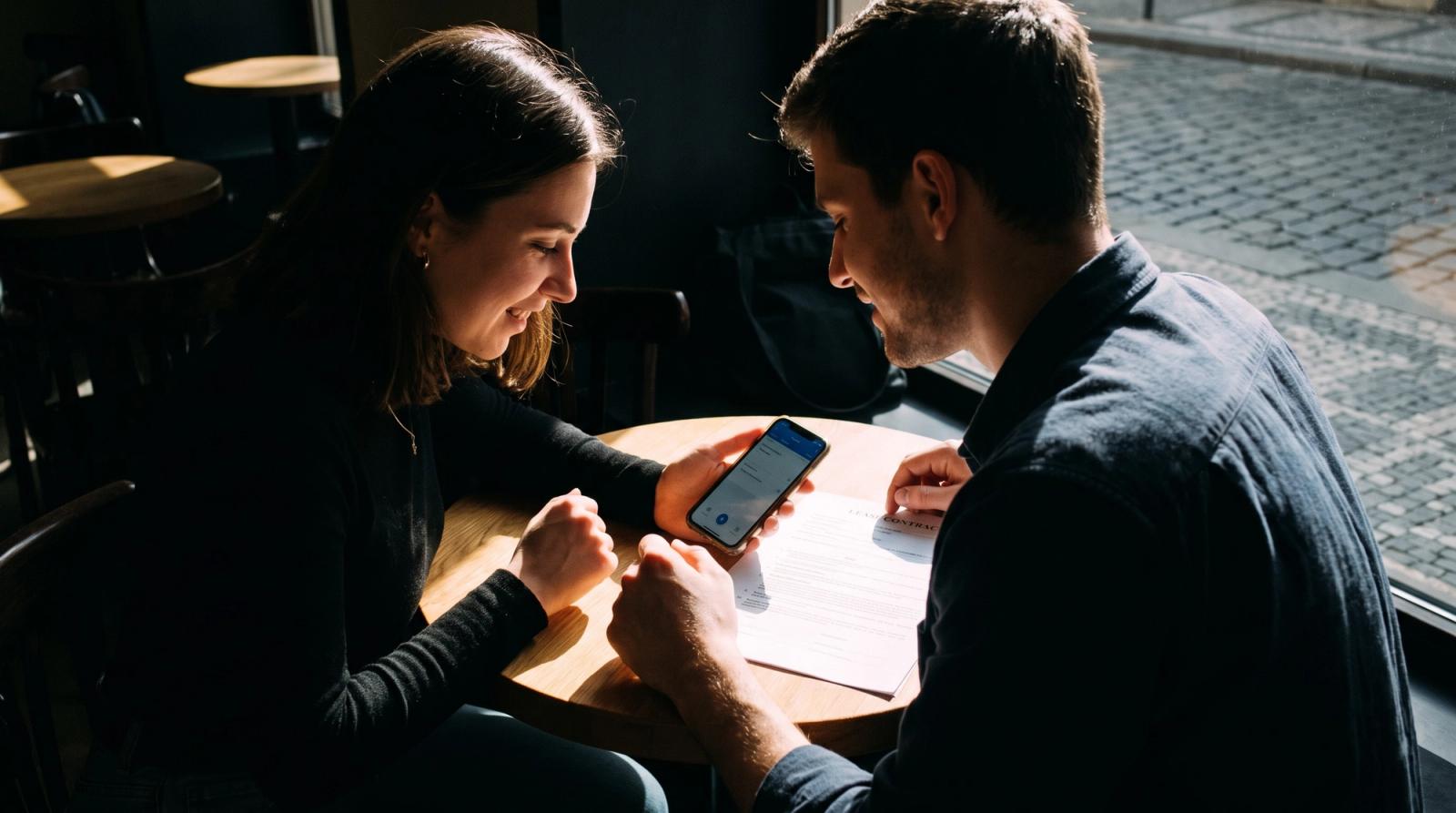
By mid-2026 more than 1.14 million foreigners lived in Czechia, a little over 10% of the population, according to the Ministry of the Interior. Yet anyone who has searched for a flat in Prague or Brno without Czech knows the pattern: a call that ends when you switch to English, a listing that says "pouze pro Čechy" (Czechs only), a viewing that is suddenly "already taken". One of DomuHQ's founders moved to Czechia from abroad and learned Czech here, so this one is personal. Here is what you can actually do.
Why landlords hesitate
Most hesitation is not hatred, it is worry: "How will I explain the boiler?", "Will they leave after three months?", "Will I have trouble with the paperwork?" You can answer every one of those before they ask:
- Lead with stability: an employment contract, a university confirmation or proof of income, and the length of stay you are planning.
- Send your first message in Czech, even a simple one, and offer a Czech-speaking contact (a colleague or friend) for anything urgent.
- Offer a bilingual contract. It protects them as much as you.
- Explain the immigration paperwork in one line. Most landlords only need to sign a normal lease. See proof of accommodation for foreigners.
The contract: never sign what you cannot read
There is no rule that a private lease must be in Czech, but the immigration office wants a certified Czech translation of anything that is not in Czech or Slovak. A bilingual Czech and English lease solves both problems. If you only get a Czech version, run it through a translator, then check the clauses that matter most: deposit and its return, notice periods, who pays which repairs, and any penalty clauses. SIMI, a Prague NGO, published a free English-friendly renting guide in 2025 that flags clauses that are not legal under Czech law. Notice rules are covered in how to end a lease.
Is "no foreigners" legal?
The Czech Anti-Discrimination Act (198/2009) covers access to housing offered to the public, which includes online rental listings. It bans discrimination based on race, ethnic origin and nationality, among other grounds. An owner can still choose a tenant for real reasons such as income, references or how many people will live there. What they cannot do is exclude a whole group of people out of prejudice. That was the Public Defender of Rights' position in a 2014 investigation, where recorded test calls showed agencies refusing viewings to Roma applicants; the Ombudsman called it direct discrimination and the Czech Trade Inspection started fine proceedings against two agencies.
How common is it? Solid recent numbers are hard to find. An older review of 500 listings by the Czech Helsinki Committee in 2012 found about 5% openly discriminatory, often excluding foreigners or Roma. Anyone who has searched recently will tell you it has not disappeared.
What you can do if it happens
- Keep evidence: a screenshot of the listing, the message, the date.
- If an agency is involved, complain to the Czech Trade Inspection (ČOI).
- Contact the Public Defender of Rights (ochrance.cz). The office can advise you and assess the case, though private landlords are not obliged to respond to it.
- Go to court. The law lets a court order the discrimination to stop, require an apology and award compensation. In discrimination cases the burden of proof partly shifts to the other side.
- Report the listing to the portal or group admins. Platforms can take down ads that break their rules.
Honestly, most people simply move on to the next flat, and that is fine. But reporting is how the practice becomes expensive.
Free help in your language
Integrační centrum Praha offers free social counselling, including help with housing, with interpreters available. InBáze, META, SIMI and OPU in Prague, and Centrum pro cizince JMK and OPU in Brno, offer counselling that is usually free; book ahead.
The shortcut: share with people who already said yes
Moving into a shared flat where the main tenant is already happy to live with internationals skips most of these problems. DomuHQ works in English and Czech, so language is visible upfront and nobody is surprised at the viewing. Start with how to find a roommate in Prague, and for the documents landlords ask for, see renting in Prague as a foreigner.
Sources
- Ministry of the Interior: migration report Q2 2026
- Public Defender of Rights: leaflet on discrimination in housing, Jan 2026
- Public Defender of Rights: report 112/2012/DIS/VP on discrimination by rental agencies, 2014
- Expats.cz: SIMI's free English-friendly renting guide, 16 Apr 2025
- Integrační centrum Praha: social counselling
Last updated: November 11, 2026
Related posts
Proof of Accommodation for Foreigners in the Czech Republic: What the Ministry Accepts
Lease, sublease or the owner's form with a verified signature? What counts as proof of accommodation, rules for rooms, and the 30-day address change deadline.

Renting an Apartment in Prague as a Foreigner: The Documents You Need
Renting in Prague as a foreigner is completely normal; what trips people up is the paperwork. Here are the documents you need to be the landlord's easy yes.